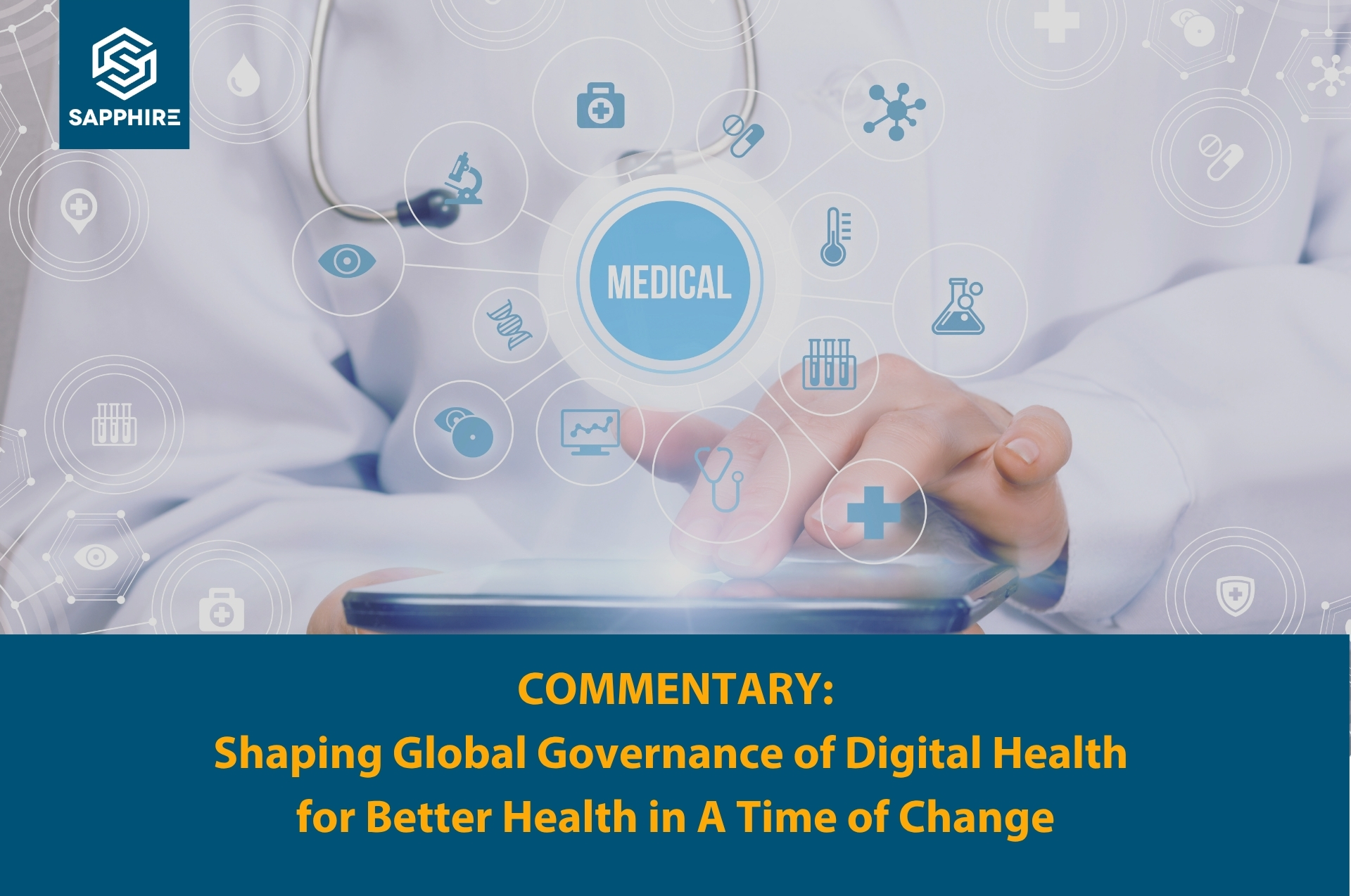
Digitalisation, including the use of Big Data and the rapid rise in the use of Artificial Intelligence (AI), has enabled a reimagination of what is possible in the health sector. Digital health has the potential to transform health systems, yet, the distribution of resources for effectively utilising digital health technologies is uneven across the world. Governance of digital health remains fragmented and there is a need to better understand and coordinate across countries. The rapid rise of AI has given fillip to these efforts over the last couple years, even as it raises its own unique considerations.
At the Prince Mahidol Award Conference (PMAC), held annually in Bangkok, Thailand, the role of digital technology has received increasing attention. At PMAC 2024, a parallel session on “Transformative Digital Technology for Future Health” examined the role of geopolitics in shaping the governance system for digital technologies for health[1]. This session brought together a country perspective from Kenya, an example of data sharing from Asia, a regional perspective from Europe as well as global perspectives, from international organisations and academia, together with discussants from country and multi-lateral perspectives. This article highlights the key messages emerging from the discussion and identifies relevant outcomes.
Infrastructure and capabilities
Data is the symbol of the digital age, much like the steam engine was to the industrial revolution. Interoperability across different platforms and cybersecurity are critical in ensuring that the full potential of data can be harnessed without misuse. Kenya has been a pioneer in using digitalisation through the M-PESA application and there is an opportunity to apply this experience to the health sector. The government is creating a digital ecosystem that links functions such as claims, supply chain management and other areas, underpinned by the Kenya digital superhighway[2]. Limitations in financial and human capacity remain a challenge and engagement with global partners, who may work on different parts of the value chain, requires an integrated approach. This creates barriers to use in both the short and long term, raising questions of sustainability.
Data sharing can contribute to innovations and talent retention, particularly as the use of personalised medicine increases, offering opportunities to improve health outcomes. Concepts of cybersecurity and “data sovereignty” are critical to take into account when designing systems as there are no clear health data governance paradigms[3]. A practical example of data sharing across countries is Oncoshot, a start-up based in Singapore, to draw insights without moving the data from the location, using cloud technology, demonstrating the possibilities available. Regional collaboration on digital health through legislation and investments in infrastructure can ensure data security and enable integration, as in the European Union (EU). Developing these capabilities in countries is crucial and one key area is to empower citizens to better utilise the data that is already available.
Governance considerations
National governance for digital health is critical, whether through dedicated taskforces or a national act for digitalisation. Yet, there are barriers to how countries, especially low- and middle-income countries (LMICs) where resources are limited, are able to harness these technologies. Given the dynamic nature of the sector and the cross-border engagements, different models of governance can be considered for this purpose:
- The Internet Corporation for Assigned Names and Numbers (ICANN)[4] is a multi-stakeholder, global, non-profit organisation that governs the internet, and has been able to maintain its neutrality to keep the internet going through various geopolitical challenges. The nature of this organisation, including its subscription-based financing model, allows it to continue to operate the internet without being reliant on a single benefactor.
- Another model that could be used is that of the European Organization for Nuclear Research, known as CERN, an intergovernmental organisation[5] that operates as a scientific governing body.
- A third potential model is to have a dedicated agency that can coordinate digital health governance. This is potentially a role for WHO, given its mandate as the global steward for health.
Fit for the future
Inclusiveness is crucial to addressing the digital divide, not only in access to digitalisation across countries but also within countries, to bridge the gap between genders, countries and other groupings. The WHO has helped frame this issue by highlighting the importance of ethical governance for AI[6],[7]. Initiatives such as the WHO’s Global Initiative on Digital Health (GIDH) and the Global Digital Health Partnership have emerged as platforms to connect and share resources[8],[9]. More broadly, addressing digital health governance requires a whole-system approach, not only limited to health and this has been highlighted across the United Nations (UN), which has implications for any governance model that will be adopted[10],[11]. Sharing knowledge on practices that have worked can ensure a steady path towards an equitable, inclusive and impactful system globally, for digital health, that can adapt to geopolitical dynamics.
Conclusion
Governance of digital health technologies requires a concerted effort from all stakeholders. Given the current geopolitical dynamics, active engagement at the regional and global levels will be critical in order to effectively harness digital technologies for better health.
[1] https://pmac2024.com/activity/11/session/detail
[2] Digital Health Convergence Workshop: The Kenyan experience | Oxford Open Digital Health | Oxford Academic
[3] Data sovereignty: A review – Patrik Hummel, Matthias Braun, Max Tretter, Peter Dabrock, 2021
[4] Internet Corporation for Assigned Names and Numbers (ICANN)
[6] Ethics and governance of artificial intelligence for health
[7] Shaping the future of AI in healthcare through ethics and governance | Humanities and Social Sciences Communications
[8] Global Initiative on Digital Health
[9] Global Digital Health Partnership
[10] United Nations System White Paper on AI Governance | United Nations – CEB
Author:
Saudamini Dabak, with inputs from Prof. Feng Mengling. We thank Mandeep Dhaliwal, Aarthi Raghavan, Daniel Mwai, Toomas Palu, Gary Marcus, Jia-Rong Low, Alain Labrique, Basant Garg, Cecilia Oh, Manish Pant who were either speakers, discussants or co-leads for this session, for their contributions to the discussions leading up to and at the session.